Healthy trees rarely happen by accident. In and around Akron, the difference between a sturdy, graceful canopy and a hazardous tangle often comes down to routine care, carefully timed pruning, and realistic risk management. I have watched Norway maples split under late spring snow because no one thinned their heavy interior growth, and seen oaks sail through 50 mile per hour wind because they were trained well when young. The climate here asks a lot of trees: freeze and thaw cycles, clay soils that hold water when you do not want it and crack when you do, fast growing species planted too close to houses, and summer storms that seem to arrive angrier every year. Good tree service pays off in fewer emergencies, better shade, higher property value, and simply less worry when the forecast turns.
Know your Akron canopy
Start with the trees you actually have. Akron neighborhoods carry a familiar mix: red and silver maples along older streets, sugar maple in parks, pin and white oaks on larger lots, crabapples and pears in front yards, Norway spruce and blue spruce as windbreaks, white pines that shoot up with soft candles each spring, and a scattering of beech, tulip poplar, sweetgum, honeylocust, river birch, and serviceberry. Ash used to be common until emerald ash borer tore through the region. You still find untreated ash hanging on, but many have declined past the point where pruning makes sense.
Each species asks for different handling. Silver maple grows fast and brittle, so it benefits from regular structural pruning and weight reduction, not heavy topping. Oaks want fewer, cleaner cuts and dislike pruning during high disease pressure; they also hold deadwood stubbornly, so crown cleaning matters. Crabapple and serviceberry prefer light, frequent touch rather than major overhauls every few years. Blue spruce struggles with needle cast in our humidity, so opening the crown just to “let light in” can backfire; instead focus on sanitation and air movement around, not inside, the tree.
Akron’s clay soils set the stage for root problems. If you see surface roots circling the base or a flare buried under mulch volcanoes, expect future instability. Wind off the Portage Lakes and the Cuyahoga Valley can funnel through corridors, so trees exposed on a hill or corner lot face more sail force than those tucked away.
What good pruning actually achieves
Pruning sounds simple until you are forty feet up, deciding whether a limb over the garage has enough collar to cut clean without stripping bark. The goal is not to make a tree look like a lollipop. In professional standards like ANSI A300, the objectives are clear: establish sound structure, remove dead, diseased or damaged wood, reduce risk by managing limb size and leverage, and maintain clearance around buildings and utilities. That last bit is where homeowners get in trouble. If you simply whack back to an arbitrary line, the tree responds with fast, weak shoots. Better to reduce back to healthy laterals that can take over the function of the removed wood.
A correct pruning cut finds the branch bark ridge and the branch collar, then trims just outside those tissues without leaving stubs. On thicker wood, a three cut method prevents tearing: an undercut several inches out, a top cut farther out to remove weight, then a final finish at the collar. Clean tools matter as much as good angles. Wiping blades with alcohol between diseased branches can keep fire blight from riding along in spring.
Timing matters more than most people think. You can safely remove deadwood any time. For live tissue in our area, late winter to very early spring is a reliable window because the tree is dormant, sap flow is low, and you avoid attracting pests. Avoid pruning oaks from roughly April through mid July to reduce the risk of oak wilt spread by nitidulid beetles. Flowering trees vary: prune spring bloomers after flowers fade, summer bloomers during dormancy. Maples will bleed if cut in early spring; the bleeding is unsightly but rarely harmful, yet some owners prefer to wait until midsummer or winter.
Structural pruning while trees are young
You can fix a lot of bad structure in a two inch diameter trunk with three careful cuts that would take a bucket truck and rigging to address 15 years later. The goal with young trees is to establish one dominant leader, well spaced scaffold branches that spiral vertically, and branch unions with strong attachment. Co dominant stems on maples and poplars are tickets to future storm damage.
Stand six to ten feet back and sight the leader. If you have two equal leaders, subdue one by reducing its upper portion, not by cutting the entire leader out if it would remove half the canopy. Space scaffold branches about a hand span to a foot apart vertically on small trees, more as the trunk thickens, and alternate sides for mechanical balance. Keep temporary lower branches shorter so you maintain a tapering trunk and protect tree service bark from sunscald, then remove those as the tree grows. On a young oak or beech, be patient and cut less at a time. On a willow or silver maple, be more assertive because the growth will surge back.
I once trained a line of six serviceberries along a driveway. The original installer left crossing limbs and turned a blind eye to included bark. We reduced competing leaders the first winter, and every other year we only needed light reductions. Ten years later, they still flower heavily without shed limbs piling up after storms. That is the payoff with structural pruning: the need for crisis cuts almost disappears.
Mature tree care and how much to remove
Once a tree is established, your job shifts from shaping to risk management and longevity. Think of the canopy in three areas. First, the crown interior often holds small dead twigs and crossing shoots older than five years that no longer serve much function. Cleaning that interior by removing deadwood and small diseased bits improves safety and looks, and it reduces places where fungi can get a foothold.
Second, the outer canopy catches wind. For healthy, mature trees, I rarely recommend removing more than 15 to 20 percent of live foliage in a single season. Heavier thinning can shock a tree and prompt vigorous but weak regrowth. When someone asks for “thinning,” check if they actually want lift, which is clearance below the crown, or reduction on a side to move branches away from a roof or wires. Do not strip all the lower limbs on a spruce to see the trunk; that practice weakens the tree and invites sunscald.
Third, reduction cuts are your friend for storm hardening. Reducing the length of a long limb by cutting back to a well attached side branch shrinks leverage dramatically. Taking four to six feet off a 30 foot lever can change how that limb behaves in wind. If the attachment shows a classic U shaped union with a visible branch bark ridge and no seam, it likely carries weight well. A narrow V with included bark needs scrutiny and, sometimes, a brace or cable in addition to pruning. Cabling is not a fail safe; it buys time and should be inspected every year or two.
An Akron calendar that respects the weather, not the clock
January and February are ideal for structural work, deadwood removal, and seeing through the crown without leaves. Ground is often firm enough to move equipment without ruts. If the forecast says deep freeze, blades can shatter, and cuts on some species become brittle, so pick your days.
March and early April invite spring pruning, but watch for sap heavy maples and avoid oaks. Many ornamental cherries and plums prefer a post bloom tidy to head off bacterial canker spread.
May through July is the growth engine. Light summer pruning to correct defects works well, but heavy reductions push a tree to spend stored energy. On fruiting ornamentals, thin carefully and watch for fire blight after warm, wet spells.
August and September bring a second window for reductions and clearance work. The tree has finished most extension growth and can respond without a big flush of watersprouts. I have used late summer to reduce sycamore leaders over a roofline with less rebound than similar cuts in spring.
October through December returns to dormancy. Leaf drop gives a clear view of deadwood and broken limbs after fall storms. Oak work is safer again from a disease perspective. If you plan significant tree removal Akron wide, winter often frees up crews and reduces landscape damage.
Safety lines between DIY and professional help
There is satisfying work a homeowner can handle and a hard stop where you should call a trained crew. Small hand pruner cuts, under an inch on low branches, are manageable with some basic training. A sharp hand saw and a ladder on flat, dry ground can handle a few dead limbs if you maintain three points of contact and stand to the side of your cut. The minute you need to lean a ladder into a crown, lift a chainsaw overhead, or guess whether a limb has tension, you have stepped into professional territory.
Use this short checklist to decide when to call a tree service Akron trusts:
- Any pruning or removal within 10 feet of a service drop or primary line. Limbs larger than 3 to 4 inches in diameter, especially above shoulder height. Trees with decay at the base, cavities, or mushrooms emerging from roots. Storm damaged trees with twisted, hung up, or partially attached branches. Work that requires climbing, rigging, or lowering over a house, fence, or street.
The right crew shows up with helmets, eye and ear protection, chaps, ropes rated for arborist work, and a plan. They set drop zones, communicate, and do not rush cuts. I still meet homeowners who think topping solves size problems. Topping creates hazardous sprouts and decay. A qualified arborist will explain why reduction and structural pruning are safer and will put that in writing.
When removal is the responsible choice
Nobody likes losing a mature shade tree. Sometimes it is the kindest, safest, and most economical decision. I consider tree removal when a trunk has more than 30 percent circumference decay, when a co dominant union with deep included bark shows active separation, when root plate heaving or soil cracking on one side suggests imminent failure, or when a target like a bedroom or busy sidewalk sits beneath a likely failure path. Ash trees left untreated for emerald ash borer often deteriorate quickly, becoming brittle and dangerous to climb. Many companies will not climb dead ash because the wood fails under hardware; they will bring in a lift if access allows.
Tree removal Akron projects vary widely in cost. A small ornamental in an open lawn might cost a few hundred dollars. A 70 foot oak overhanging power lines and a deck can run into the low thousands, especially if the crew needs a crane for safe, efficient lowering. Expect permits or notifications if the tree sits in the right of way. Check with the City of Akron if a tree is in the tree lawn between sidewalk and street; often that is a public tree, and the city or a contractor under city authority must handle it.
Once the tree is down, you still have a stump.
Stump grinding, cleanup, and replanting
Grinding is the most practical way to deal with a stump in our soils. A typical grind takes the stump 6 to 10 inches below grade, sometimes deeper if you plan to replant in the same spot. Surface roots may require separate passes. The machine leaves a mound of chips and soil. Those chips settle for weeks as the grind zone decomposes and air spaces collapse. Topping the area with a bit of topsoil and raking it out helps. If you plan to plant lawn immediately, consider removing a portion of the chips so the high carbon mulch does not lock up nitrogen at the soil surface. Many clients keep the chips for paths or beds; others ask us to haul them away.
It is worth noting that people often search for stump grinding with the spelling stump griding. However you spell it, the service is the same. If you intend to replant a tree close to the old location, shift at least a few feet away from the grind zone to find undisturbed soil. Species with allelopathic compounds, like black walnut, complicate replanting; choose tolerant species or relocate the new tree.
Storm damage cleanup in a region that sees ice and wind
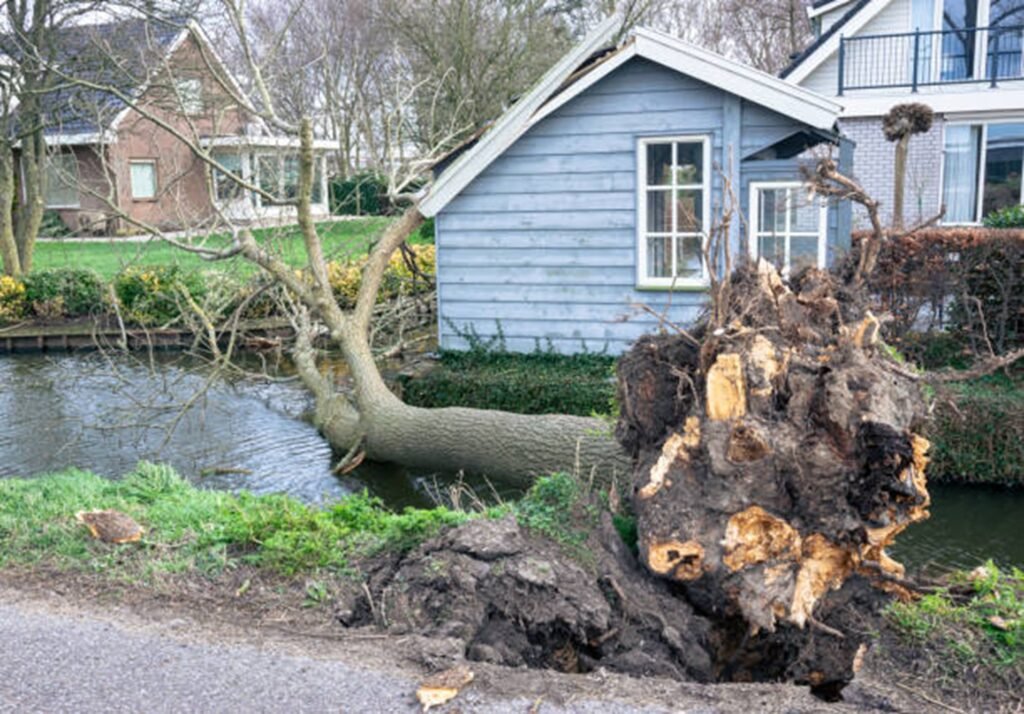
Akron storms do their damage in different ways. Wet spring snow weighs down leaves if a late frost pushes leaf-out and a storm follows. Summer thunderheads snap weak attachments. Ice storms glaze needles and small twigs, adding startling weight to conifers and narrow crowned trees. I have watched a white pine shed long, whippy limbs in a glaze event, while the adjacent oak held firm.
Preparation is not glamorous, but it works. Identify long, overextended limbs ahead of storm season and reduce them back to lateral branches. Thin competing shoots in the interior so loads move through cleanly. Remove deadwood so it does not become a missile. If a storm arrives anyway and you wake to damage, triage beats panic.
Here is a tight sequence that keeps people safe and prevents further harm:
- First, look for wires. If any limb touches or drapes a line, back away and call the utility before doing anything else. Second, stabilize the area. Block off foot traffic under split limbs or near cracked trunks. Third, take photos for insurance before moving branches. Insurers appreciate context. Fourth, only cut what you can safely reach from the ground with hand tools. Leave mid canopy and overhead cuts to a trained crew with rigging. Fifth, schedule an assessment quickly. Fresh breaks invite decay, and hanging limbs can drop days later as wood dries.
Avoid shaking ice off branches. The impulse makes sense, but ice adds weight, and vibration can snap wood that might have held if left alone. Once temperatures climb, limbs usually rebound.
Roots, soil, and the part nobody sees
Above ground care is only half the plan. Roots are where most tree problems begin. Akron’s heavy, often compacted clay suffocates roots when water is trapped, then cracks and shears fine roots when it dries. Mulch is your ally. A two to three inch layer of shredded hardwood or pine around the root zone, kept a few inches away from the trunk flare, moderates soil temperature, protects from mower blight, and conserves moisture. Skip the mulch volcanoes; burying the flare rots bark and invites girdling roots.
Watering should match soil, species, and weather. A newly planted tree needs the equivalent of about 10 to 15 gallons per week in the first growing season, delivered slowly to soak to 8 to 12 inches. In July heat, bump that to twice a week if leaves flag by noon. For established trees, deep, occasional watering during droughts works better than nightly sprinkles. If your shovel cannot penetrate because soil has baked, consider aerated mulch rings or vertical mulching with coarse material to open channels.
Fertilization can help on truly nutrient poor sites, but indiscriminate fertilizer does more harm than good. Test soil before you spread anything. In my experience, organic matter and proper mulch deliver more long term health than a quick hit of nitrogen. If chlorosis shows in maples or river birch on high pH sites, address soil chemistry or chelated iron applications rather than dumping fertilizer.
Root protection during construction is a fight worth having. Put up a fence at least out to the dripline, farther if site plans allow. Redirect vehicles, store materials elsewhere, and forbid trenching through that zone. I have saved plenty of trees from death by compaction with a simple rule: if you would not park on the roof, do not park on the roots.
Pests and diseases common to Summit County
Emerald ash borer rewrote our street canopies. If you still have an ash in decent shape and you love it, treatment with systemic insecticides can keep it going. It is not cheap and not a one time fix; plan on ongoing treatments and monitoring. For hemlocks, the woolly adelgid has moved across Ohio. Inspect undersides of needles for white, cottony masses, especially in winter. Early treatment saves the tree and costs far less than removal and replacement.
On oaks, oak wilt is the specter. It is not everywhere, but movement of firewood and pruning during the wrong months can spread it. A professional can assess risk and plan pruning around it. Apples, crabapples, and serviceberries show apple scab and sometimes fire blight in wet springs. Prune to improve air flow between trees, not by hollowing out a single tree. Sanitation makes a difference: remove fallen infected leaves and mummified fruit late in the season. Blue spruce struggles with Rhizosphaera needle cast here; fungicide might help early, but in many cases I recommend replacing aging spruce in tight yards with more resilient species.
Working with a tree service Akron homeowners rely on
Hiring the right crew is as important as choosing the right cut. Ask for an ISA Certified Arborist on staff. Verify insurance with certificates sent directly from the insurer. Clarify whether the quote includes brush removal, log hauling, stump grinding, lawn repair if ruts occur, and utility coordination. If a company underbids by skipping protection mats over soft ground, the cheap job can become expensive quickly.
Expect a written scope of work using proper terms like crown cleaning, reduction to clear structure by a stated distance, or removal to the base with stump grinding to a specified depth. Vague quotes that say trim tree often lead to mismatched expectations. I prefer walking the site with the homeowner, pointing to each limb and discussing options. You learn what bothers them, like gutter clogging or low branches over a play area, and can aim cuts to solve real problems.
Timing your job can save money. Winter often brings better pricing for non emergency work because crews are less slammed with storm calls. If you have several neighbors needing tree service Akron wide, bundle projects. Mobilization is a cost, and multiple jobs on a street can reduce overall time and setup.
Two quick case notes from past seasons
A windstorm snapped a large leader from a mature silver maple over a garage in Highland Square. The co dominant union showed years of included bark. We reduced the remaining leader by about 15 percent, installed a static cable between it and a healthy adjacent stem with good attachment, and scheduled follow up inspections every two years. The homeowner wanted removal, but the tree still had sound wood and no decay at the base. Four years on, after multiple storms, it is holding up. The garage no longer sits under a lever arm, and the interior is cleaner.
On a steep lot near Goodyear Heights, a row of Norway spruce leaned toward a property line. Needle cast had thinned them, and the neighbor wanted light. Topping would have gutted the trees. We removed two at the worst lean angles, pruned dead and rubbing limbs on the rest, and underplanted shade tolerant natives like serviceberry and witch hazel to create a layered screen. By the third season, the understory filled in, the remaining spruce regained some density with better airflow, and the legal dispute simmered down. Not every screen needs a chainsaw solution.
Myths and habits that shorten tree life
The fastest way to ruin a tree is to top it. Topping triggers a hedge of weak shoots at each cut, opens large wounds to decay, and creates a cycle of constant, dangerous follow up work. Another trap is staking young trees tightly and leaving the straps for years. Trees need to sway to build taper. If a stake is necessary, use soft ties and remove them within a year. Mulch piled against trunks looks neat for a week and rots bark for years after. And avoid planting depth mistakes. Find the flare at the base, set it level with the surrounding grade, and backfill with the site soil. Amending the hole with rich compost in a column of otherwise dense clay can create a bathtub effect where water sits around the trunk.
Finally, do not put blind faith in paint or sealants for pruning wounds. Modern science does not support it for most species and cuts. A clean, proper cut allows the tree to compartmentalize. Sealants often trap moisture and pathogens.
A few closing thoughts on long term care
Tree care asks for patience. A thoughtful cut today prevents a mess five years out. A call to a certified arborist before building a patio can preserve a maple that would otherwise decline. When you need tree removal Akron professionals can do it safely and efficiently, then advise on replacement species that fit the space. When you keep a tree, seasonal maintenance, smart pruning, and attentive watering make the difference.
If you walk your yard after reading this, look up and out. Trace the load path of long limbs. Find the trunk flare at each base. Check for deadwood tucked above the driveway. Decide what you can handle and what belongs with a crew that shows up with ropes, saws, and an eye for structure. Whether it is routine trimming, stump grinding after an old elm finally goes down, or fast storm damage cleanup after a thunderhead barrels through, the right approach in Akron’s climate is steady, conservative, and based on how trees really grow. That is how you keep shade overhead and worry off your shoulders, year after year.
Address: 159 S Main St Ste 165, Akron, OH 44308
Phone: (234) 413-1559
Website: https://akrontreecare.com/
Hours:
Monday: Open 24 hours
Tuesday: Open 24 hours
Wednesday: Open 24 hours
Thursday: Open 24 hours
Friday: Open 24 hours
Saturday: Open 24 hours
Sunday: Open 24 hours
Open-location code: 3FJJ+8H Akron, Ohio Map/listing URL: https://www.google.com/maps/place/Red+Wolf+Tree+Service/@41.0808118,-81.5211807,16z/data=!3m1!4b1!4m6!3m5!1s0x8830d7006191b63b:0xa505228cac054deb!8m2!3d41.0808078!4d-81.5186058!16s%2Fg%2F11yydy8lbt
Embed:
https://akrontreecare.com/
Red Wolf Tree Service provides tree removal, tree trimming, stump grinding, storm cleanup, and emergency tree service for property owners in Akron, Ohio.
The company works with homeowners and commercial property managers who need safe, dependable tree care and clear communication from start to finish.
Its stated service area centers on Akron, with local familiarity that helps the team respond to residential lots, wooded properties, and urgent storm-related issues throughout the area.
Customers looking for help with hazardous limbs, unwanted trees, storm debris, or overgrown branches can contact Red Wolf Tree Service at (234) 413-1559 or visit https://akrontreecare.com/.
The business presents itself as a licensed and insured local tree service provider focused on safe workmanship and reliable results.
For visitors comparing local providers, the business also has a public map listing tied to its Akron address on South Main Street.
Whether the job involves routine trimming or urgent cleanup after severe weather, the company’s website highlights practical tree care designed to protect homes, yards, and access areas.
Red Wolf Tree Service is positioned as an Akron-based option for people who want year-round tree care support from a local crew serving the surrounding community.
Popular Questions About Red Wolf Tree Service
What services does Red Wolf Tree Service offer?
Red Wolf Tree Service lists tree removal, tree trimming and pruning, stump grinding and removal, emergency tree services, and storm damage cleanup on its website.
Where is Red Wolf Tree Service located?
The business lists its address as 159 S Main St Ste 165, Akron, OH 44308.
What areas does Red Wolf Tree Service serve?
The website highlights Akron, Ohio as its service area and describes service for local residential and commercial properties in and around Akron.
Is Red Wolf Tree Service available for emergency work?
Yes. The company’s website specifically lists emergency tree services and storm damage cleanup among its core offerings.
Does Red Wolf Tree Service handle stump removal?
Yes. The website includes stump grinding and removal as one of its main tree care services.
Are the business hours listed publicly?
Yes. The homepage shows the business as open 24/7.
How can I contact Red Wolf Tree Service?
Call (234) 413-1559, visit https://akrontreecare.com/.
Landmarks Near Akron, OH
Lock 3 Park – A well-known downtown Akron gathering place on South Main Street with year-round events and easy visibility for nearby service calls. If your property is near Lock 3, Red Wolf Tree Service can be reached at (234) 413-1559 for local tree care support.
Ohio & Erie Canal Towpath Trail (Downtown Akron access) – The Towpath connects downtown Akron to regional trails and green space, making it a useful reference point for nearby neighborhoods and properties. For tree service near the Towpath corridor, visit https://akrontreecare.com/.
Akron Civic Theatre – This major downtown venue sits next to Lock 3 and helps identify the central Akron area the business serves. If your property is nearby, you can contact Red Wolf Tree Service for trimming, removal, or storm cleanup.
Akron Art Museum – Located at 1 South High Street in downtown Akron, the museum is another practical reference point for nearby residential and commercial service needs. Call ahead if you need tree work near the downtown core.
Stan Hywet Hall & Gardens – One of Akron’s best-known historic destinations, located on North Portage Path. Properties in surrounding neighborhoods can use this landmark when describing service locations.
7 17 Credit Union Park – The Akron RubberDucks’ downtown ballpark at 300 South Main Street is a strong directional landmark for nearby homes and businesses needing tree care. Use it as a reference point when requesting service.
Highland Square – This West Market Street district is a recognizable Akron destination with shops, restaurants, and neighborhood traffic. It is a practical area marker for customers scheduling tree service on Akron’s west side.